
Saturday, May 01, 2010

Saturday Sublime
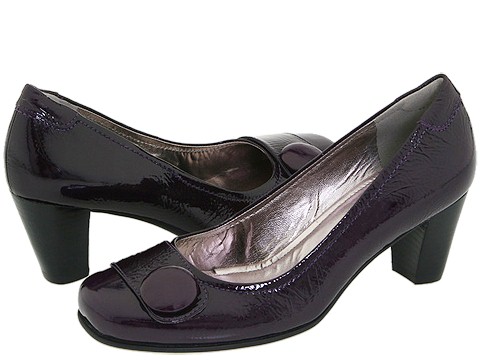 Purple patent pumps from ECCO.
 Italian paper from Paper Studio. This is going on the inside back of my secretary if I ever get around to redoing it.
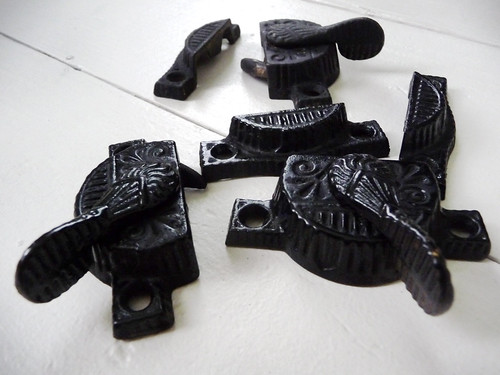 Anna at Door Sixteen just finished stripping paint off the locks from her living room windows.
 This is the sort of thing I admire her for: I barely have the patience to consider the job.

Friday, April 30, 2010
All in favor, say "Aye".
Wrong-Way-Ray gave us our start/He said, "Don't listen to your heart"/"Instead, please follow these instructions/Towards the path to self-destruction"....
Unlimited buffoonery in the dark...
We'll do this 'till we die. All in favor....say "Aye".
Big holes
Sometimes, they leave big holes in you.
The people who die--that is, the patients you can't save--generally leave little holes, the sort that punctuate a baby Swiss cheese. If you gave them any more space than that, you wouldn't have a soul left.
But one time in a hundred, you get a really big hole.
The patient had a big hole in her. She was split from breastbone to pubis, and from one side of her ribcage to the other. They'd had to take out both of her kidneys and most of her large intestine, and a few bits and bobs in her mesentery, as well. What had been gut was now Gore-Tex. What had worked--however marginally--was now gone, and she was going to be on dialysis for the rest of her very short life.
"I think I'm going to die", she said, and I checked her color. It was good--her cheeks were pink and her eyes were bright. "I'm okay with that," she said, "I'm just scared of pain."
So I hit the button on the Dilaudid pump and prepared to listen.
The one thing nursing at night teaches you is listening. For some reason, patients are more prepared to talk about their fears and hopes at two a.m. than they are at any other time.
We talked about dying. She talked about her family, about her husband, with whom she'd shared forty-one years. It hadn't always been easy; she had secrets she'd kept from all of them that she told me that morning, in the quiet space between lab draws and rounds. Sometimes you're the nurse. Sometimes you're the confessor.
She died. She ended up dying. She passed. She coded, and we couldn't bring her back.
She left a big hole in my chest. As bad as things are, I wanted to tell her, they are still better than they could be; you have somebody at the side of the bed who loves you. You have your faith--with that, you ought to go to Heaven. You have children to remember you, and grandkids who will remember you, too, without the static of discipline and daily life to complicate their affection.
Put bluntly, without sentimentality or the rosy glow of blogging, something cut loose in her belly. She bled to death internally, probably experiencing a fifteen- or twenty-minute period of intense pain. We tried to bring her back with artificial respirations and chest compressions, but that only made the bleeding worse and hastened her death.
A fifteen- or twenty-minute period of intense pain would be welcome right now, as I contemplate the hole in my belly that matches hers. You can't always catch everything. You can't prevent every complication. You can't be enough.
She was mine, and she's dead, and I wonder what I missed, what I lacked.
Sometimes, you are not enough. It's an interesting process, to learn how to live with that.
Wednesday, April 28, 2010
Hey, Eloquent Anon, Classmate of Snurse8....
Dammit, I wish I had a way to do this rather than a generalized shout-out, but would you please email me?
Link is to the right under "Speak".
Many thanks.
Tuesday, April 27, 2010
Especially for the students: The bully professor
An astute Anonymous Minion commented on my bully post below that she'd/he'd had trouble with bullying professors in school. I don't particularly want to go back and find the quote, as I'm currently recovering from a FABULOUS alcohol-and-food-soaked weekend, but it was along the lines of "Dude. Totes not the case. My nursing professors are snacking on the bodies of students even as we speak."
Except more eloquent than that.
I don't know if I've told this story before, but the first day of finals in my first semester of nursing school, I had to put down my beloved, beloved dog. She'd been sick for a while and had taken a sudden and awful turn for the worst, so I skipped a clinical exam with the assurance that I would and could make it up the next day.
When I went to the professor who was administering that exam, (who, by the way, was fine with me making it up) she told me the following thing:
"You know, you're going to have to learn to prioritize what's really important."
My clearest memory of that encounter was thinking, "I could put her up to the wall and nail that gorram bow on the back of her head to these lockers."
Later, I had a professor who told us quite bluntly that all nurses were codependent, bitchy, and mentally ill. Even later than that, I had a third professor who used her position to advance her own quite odd ideas about health care--believe me when I tell you that a "Vitamin C cleanse" was the least weird thing she brought up in patho--and go on political rants unrelated to the course.
It wasn't until I had been a nurse for a couple of years that I realized that all these women had one thing in common: they hated nursing as a career. They'd gotten *out* of hospital nursing because they either couldn't manage the speed and intensity of floor work (the first professor was quite frank about that) or they were depressed or disgruntled by, you know, actually having to conform to things like protocols and policies.
The instructors I had who were still working as nurses, on the other hand, were fantastic. They were, thank God, in the majority--and they were, as a group, some of the toughest, strongest, most skilled women I have ever met in any profession. They were nurturing in the best sense of the word: emphasizing strengths, correcting weaknesses, and not afraid to admit when they didn't know the answers. They were realistic about the weirdos we were likely to encounter, and gave us tools to deal with them. They demanded respect not by being autocratic, but by showing us students what good nursing really was. Some of them would express frustration with doctors or hospital policies or the nursing world in general sometimes, but that frustration was always tempered with the lesson that some things that frustrate you nonetheless have a purpose.
As a result of that experience, and as a result of working with dozens of other nursing professors from other institutions over the years, I look at nursing professors with slightly narrowed eyes now. Honestly, if somebody's still working a floor job or an ICU job on weekends, I tend to take them more seriously--that's my personal prejudice, and I own it.
The point of this is that, if you have a professor who's a bully--belittling, negative, angsty about nursing in general--you should look at where they're coming from. It's not necessarily going to help you solve the bullying problem, but it'll at least give you an insight into their psychology. It might even help to keep you from getting too depressed.
Of the nine professors I had through school, three were bugnuts insane. Of the probably three dozen professors I've worked with in a clinical setting, there have been five I was very, very concerned about. The rest of 'em, whether in my own school or in the hospital, have ranged from good to awesome. They're out there, the good instructors--it's just that the way the typical nursing school is funded and run makes it hard for the good ones to be obviously good. They're too busy grading and running committees and publishing.
My advice? Look for the good 'uns. Make an effort to get to know those professors who you could see as solid mentors outside of class. Use them as buffers against the bugnuttery. Polish your Crazy Detector, and keep it active during your first year or two as a nurse.
And do not despair. Corporate culture varies greatly from hospital to hospital. The culture can even be changed from the inside (but that's another post for another time). If you find yourself in the alligator pit, the beauty of nursing as a job is that you can always find a less-reptile-infested place to work.
And, if you can find a good 'un or two, to bloom.
If you're one of the students I precept, I will do my level best to make you less frightened of what's coming. You and me, we're in this thing together, and you can teach me as much as I can teach you. Provided I don't go bugnuts from this weekend's mashed-potato-and-wine overdose.
Monday, April 26, 2010
Saturday, April 24, 2010
When What's For Lunch Is You: Dealing With Workplace Bullies.
Nurses eat their young.
Bullshit.
Nurses don't eat their young any more than electricians do, or bookstore clerks do, or lifeguards do. There are bullies in every profession; the thing about nursing is that we're expected to be all warm and cuddly and friendly and healing angels of peace yadda yadda. So when "horizontal violence", or bullying, happens, everyone clutches their pearls and has a little crinoline-lifting moment.
Still, if you have to deal with a bully at work, things can suck hard. I deal with three on a regular basis. Two I've dealt with fairly successfully up to now and the other I've ignored. Here, therefore, are the three types of bullies you'll encounter most frequently and the ways I've come up with to handle these people. More suggestions in the comments would be welcome.
(Nota Bene to new nurses: If your manager is the one who's determined to clean your bones, get a new job. There is no winning with a bullying boss, unless you're willing to spend a whole lot of time and effort to get them reprimanded repeatedly and then fired. If you're new, quite frankly, you have better ways to spend your time. Get the hell out and leave the crusade to older nurses who don't have to worry about ruining their future careers through one bad apple. Seriously.)
Bully Number One: The Know-It-All.
This person just wants to help you. Yeah, right. They know more than you do (debatable) and are better at their job than you are (extremely debatable), and are determined to let you know it every single time you two work together. It's wearing and exhausting to have to listen to unsolicited advice when you're trying to get something done, and a lot of what the Know-It-All does involves criticizing (ever so subtly!) the people who taught you how to do those things in the first place.
How To Deal With Bully Number One: Speak Up.
This is the hardest sort of bully to work with, though he's often the least damaging to you personally and professionally. Bullies in general are easily recognized by other people that you work with; it's likely that this guy has a reputation that preceeds him. Still, he can make you (meaning me) freeze up and screw little things up when he's got you under the microscope, no matter how much experience you've got.
Therefore, the only way to handle such a person is to be frank. You have to tell them--sometimes repeatedly, in a variety of situations--that you're doing fine, thanks, that yes, you understand that X, Y, and Z lead to Q, and that the way you're running that line is just fine with your preceptor, manager, and the attending.
Doing it respectfully is the key. Doing it without losing your temper is critical.
Oh, and by the way: Never, ever, ever ask this type of person for help. They'll likely defer to the patient care aid, the charge nurse, or Santa Claus before actually being useful.
Bully Number Two: It's a bird! It's a plane! No, it's Off-The-Handle Man (or Woman)!!
This sort of person can be nurse, doctor, or aid. Or respiratory therapist or X-ray person or whatever. The thing that distinguishes this sort of bully is that everything will be fine for some time.....when suddenly, they'll blow up at you over a situation or problem over which you either have no control or weren't involved in in the first place.
There's usually shouting involved. There's also usually hand-flapping, eye-rolling, and perhaps some loose spittle here and there. It's scary and can be enraging, but like the Know-It-All, the actions of OTHM, while disturbing, really don't make much of a lasting difference to anybody.
How To Deal With Bully Number Two: Employ Heavy Weaponry.
This is another sort of situation you gotta deal with immediately. It's fresh in my mind because I just had a mild, drama-free showdown with our local OTHW the other day, and here's what I did:
I waited as calmly as possible until she finished screeching, and then I said, "There's obviously a problem here. Let's take it to Boss Lady as soon as she gets in."
OTHW backed down immediately, saying that oh, no, that's not necessary, but--and here's where the heavy weaponry part kicks in--I would not let her off the hook. She'd yelled at me for something completely beyond my control, made some remarks about my parentage and my personality into the bargain, and scared hell out of a student I was precepting.
So in the morning, off we went to see Boss Lady. As we walked into her office, I said, "OTHW got very upset with me this morning, and so we need a mediator. I'll let her talk first." And then I sat down and made myself comfortable while she ranted.
This is, again, crucial: you must let the nutjob spew gaskets and bolts all over before you respond in a reasoned, logical manner. Not only will it make you look like a fair person, but it's golden for getting your point across in such a way that showcases the other person's wackiness.
Not only, then, do you show your boss where the problem is, but you do something equally important: you let OTHperson know that you are on it, you are down with it, and you are not afraid to bring it to their doorstep (as the kids say). Not being intimidated is what makes these bullies leave you alone.
And finally, Bully Number Three: She Who Must Not Be Named.
I have no good name for this person. If there's a nurse that eats her young, this is the one: passive-aggressive, condescending, subtly critical, and prone to complain about other nurses to residents and attendings. This is the bully that you have to watch out for, as she can be damaging to your reputation as a nurse and your standing with your boss and the people who aren't there all day (like doctors).
How To Deal With Bully Number Three: Get Ready For The Long Haul
Unfortunately, like all things toxic and explosive, this person is the hardest sort of workplace bully to handle. You can go about it two ways: ignore what's happening and just keep your head down, or write everything down and make a near-Federal case of it when you have enough evidence.
You know how everybody always tells you, "Write everything down", right? Well, it's true: it does give you ammunition when and if you want to confront SWMNBN in the boss's office. (Don't ever do it alone, without a senior person there. That way lieth disaster, verily.) You'll need to be as careful at recording what she says or does as you would be in documenting the care of a very ill patient with litigation-happy family: that's the only way to keep yourself from becoming mired in she-said/he-said Hell.
Try to mitigate this person's actions and words by forging close relationships with the doctors and nurses (and everybody else) you work with. In dealing with our unit's SWMNBN, the reputation that I've developed--carefully and consciously--over the last eight years has been invaluable. You may not have that depth of experience, but it's never a bad time to start building respectful, open relationships with your peers.
And, if it comes to the point that you have to say something to your boss (it might not; often this bully's teeth are pulled when you ignore her or him), it's usually best to meet alone with the boss and show them the evidence you've compiled, then let him or her take it from there. The more ammunition you have, the better--and the higher quality ammo you've got, the better. If a doc reports that SWMNBN told her that you'd not done some vital thing, ask the doc to write that down for you, and keep it with your other documentation.
I wish you luck in dealing with this particular bully. I was fortunate that, when my unit's bully complained to an attending about the care I supposedly hadn't given a patient, she chose an attending with whom I'd just discussed that care, and with whom I have an excellent working relationship. The doc basically nipped that particular bitch in the bud, and I've had no problems since, but it was pure chance that it happened that way.
Tell your fellow Faithful Minions and any new Minions out there how you deal with bullies in the comments, please. And thank you.
The kids across the street are having a party.
After an hour of yowling from a woman who seemed to think that elliding her notes was akin to sounding like a drunken Sara Jaffe, the music stopped.
The band went away, to be replaced by a Celtic-mash group on acoustics, who, if I'm hearing it correctly, are playing the Who's "Boris The Spider" with three-part harmony on the "BOOORRRIIISSS THE SPIIIIDER" part.
Nice fiddle work.
Tuesday, April 20, 2010
Hair of the dog
"Hi, Ginny," I said, as I walked into the room, holding a syringe with heparin in it and a couple of pills in a cup.
Ginny looked up, looked alert, but said nothing.
The guy in the bed was relaxed. Ginny stayed with him twenty-four hours a day, helped him walk around the halls (this was back when I was still on the floor), and generally helped with his treatment. She had even stayed in the CCU with him, contrary to hospital policy, overnight after he'd had his cervical laminectomy.
The guy in the bed stayed relaxed, answering questions about how he felt and whether he had had a return of the numbness and tingling in his hands. He took the heparin shot in his belly without complaint, though Ginny looked narrowly at me as I approached him with the needle. I didn't think she'd do anything, but I didn't want to get into a scrum with her: not only was she intelligent, observant, and devoted, she had twenty-two teeth to each jaw and was faster than any human I'd ever met.
Ginny was a chocolate standard Poodle. She lived with her master/soldier/friend as ballast against the worst effects of PTSD.
When he walked the floor, holding the pole on which his IV pump hung, Ginny would scan around the corner before he got there. When anyone came in the room, she would give him warning before we knocked, so he wouldn't panic at the loud, unexpected sound. Ginny had been trained to bring him his phone when it rang, always on the vibrate setting. Ginny did a lot for him that we couldn't do.
Ginny hated hospital food just as much as her human did.
At the same time we had the guy with the cervical lami in, we had a woman on the opposite hall who rescued dogs and trained them to be helper animals. She had a side business making organic pet treats. I brought Ginny a couple of the woman's peanut-butter biscuits, which she gratefully accepted as a break from dry kibble and awful hospital food treats.
Ginny was a celebrity in the hospital. With her yellow Animal Assistance vest on, she looked quite stylish. Her coat was trimmed close, except for the typical Poodle puff on top of the head, and her nails were short. She didn't need a leash, and would ask politely to go outside by coming to the nurses' station, raising up on her hind legs, and staring fixedly at the unit clerk, who would then jump at the chance to take her out.
Sometimes I wonder what happened to her human, my patient. I don't worry as much about him as I do about other people who don't have a Ginny: it's easier when you know somebody is watching after your patient when they head home, even if that somebody has four legs.
Musings, and where the magic happens.
After some discussion with the two guys and the woman in the aisle with me, it was decided that you cannot name-check Mister Mister and claim to be "thug" and "gangsta" and have an "untrimmed chest" all in the same song.
The ukulele spoke in the group's favor, but the idea that a skinny white guy in his forties would try to sound cool sank that prop right away.
Still, it's a good hook. I mean, if you listen to it without context, and don't pay attention to the words, and most especially don't watch the video:
Also, where the magic happens: When I look up, I see the top half of a secretary that was passed down to me through my parents from my great-grandmother, for whom I'm named. I've stuck a lot of stuff up under the wood divider over the glass doors. For instance:

That's the HN logo, yes. The other side has pictures of the Patchwork Girl of OZ and a poster of the entire "House" cast with the caption "It takes a village to kill a patient."

I have no clue why this is still sideways. Blame Blogger.
This is what I see when I glance up from downloading bad music videos (cute dog, though) and posting about work.
Monday, April 19, 2010
0530 Monday morning...
...and all I want to do is take a blood sugar.
Instead, I get into an involved conversation with the patient about the aftereffects of his brain surgery.
It's as much of a conversation as you can have with somebody who has expressive aphasia; the tumor has left him unable to form complete sentences without a whole lot of effort, and he's still having trouble naming objects. Still, you can tell when something's bothering somebody, right? So I stuck around after I stuck his finger and let him fumble-talk.
We went through what to expect in terms of his recovery. He'll get his speech back--there was no permanent damage to his speech centers. What he said next surprised me.
"I don't want to die."
In one complete sentence, with no pauses.
"I...don't...know...not...good..."
There was a long pause. He finally looked at me, rolled his eyes, and sighed out one word:
"Catholic."
"Oh," I said, "I get it."
"I...don't...know...what's...in...store..."
"You don't know what's going to happen to you when you die?" I asked.
"Yeah."
Then he said, "...Want...to...die..."
"Give me more" I told him.
"Want...to...die....Wife. Daughter. Other daughter. Forty...forty-three...have...own...things...not...be...like..." and he stopped. He waved one hand, taking in his body in the bed, the drains coming out of his skull, the lines and cords around him.
"You don't want to be a burden to them." I said, more certain of this than the last one.
"Yes" he said, definitely.
I was stuck. Theological discussion of what happens after death is not one of my skills. Four years at a Christian college left me with a complete uncertainty of who's going to hell and who's going to heaven (with a few notable exceptions) and totally unprepared to coax out the threads of the fear of God out of a man who could barely say his own name. Likewise, I couldn't be certain that he wouldn't be a burden, in the sense that we usually understand burdens: I couldn't assure him that he would be able to talk as well as he had in the past, or that he wouldn't need help, later on when the tumor came back, with such things as dressing and peeing.
He went on. I was going to stay at his bedside for as long as this took. There are more important things than checking blood sugars on somebody who's needed no treatment for them for a week, after all.
"My...wife. Saint. Never...not...doesn't...angry. Not a cusser. I...cuss." Again, the hand-wave.
Cussing is not, as far as I can tell, a problem for God. But cussing is not what this is about, not really. Cussing is a stand-in for all the things he's screwed up, all the times he had to kill somebody during his time in the Marines, all the things he could've done better. I know this, and I feel my heart break a little for him. There's so much in there that he wants to get out, and right now, at this time when it's so important to be able to confess his sins, his speech is tortured and elliptical.
I tell him, "God speaks in metaphors and without words. You don't need to have words to talk to God, and I don't believe that you've done anything worth going to hell for."
Then I remember: his wife told me how he still has nightmares about the man whose throat he cut, years ago, in some other country in some other conflict.
"Don't...know...what...He...will...think."
There were other things I said. I remember most of them, but they're not important to put down here. Some of them were funny. Some of them weren't.
Why, I raged at God, do You put me in these situations? You know I don't have the answers to why You do the things You do. You know I can't just sum up everything with some pat theological answer. You were the One who made me question every-damn-thing You do, and yet you present me with somebody who needs solace? Fuck you, God. Just... fuck You.
I drove home that morning with Neko blasting as loud as I could stand her, wondering if I had enough beer in the house to make a difference.
Yeah, Dude. Whatever.
"You're really going to take all that? You don't need to take all that. You can always hang the bag up there, you know. Let me show you how this works. This bed turns in the middle, like a tank, so you don't have to haul it around. You're really going to do that? Why don't you do that this way instead? Here, let me show you how I tie the tourniquet. It'd be easier if you did this *this* way, rather than the way you've been doing it for nearly a decade. By the way, my way is always better than your way, and I am smarter and more attractive than you into the bargain."
And on and on and on, all the way to the basement. At which point, I heard the second-sweetest words ever:
"I guess you just want me to shut up, huh?"
I said, "Yes. Yes, I do."
Saturday, April 17, 2010
You'd need three words to say anything sweeter.
"You're cancelled."
God, I love that. I especially love it when I've already accomplished everything I wanted to do tonight (organize utility room shelves, wash and rehang curtains, finish laundry, vacuum, clean bathroom) and have had dinner besides, so the rest of the night is gravy.
And it's raining, to ice the cake. And it's supposed to rain all day tomorrow, too.
Max is indoors on his bed, snoozing damply and waking up with the occasional *boof* when he hears the neighbor dogs bark. You can, if you look closely, then see the wheels turning in his head: is it worth it to go outside in the wet and pretend to be Braveheart, or should he stay here inside, in bed? Bed wins.
The guy I took care of for the past two nights, the one with the crazy electrolyte imbalances (potassium of six, anybody? Calcium of three-point-eight? You go!) has transferred up to the floor. The other guy, the one who had his entire throat rewired, will be with us for a day or so more, but at least I don't have to be the one checking four pulses with a Doppler every hour and hoping the flap stays viable.
I feel so sorry for people who have complex head-and-neck dissections, or folks with really complex plastic surgery. It's never for a benign reason that you get a flap; it's always because you have to have a breast or two removed, or (God forbid) your entire tongue, and you get some new architecture on your face into the bargain. No matter how good we get at plastic surgery, a jaw that's rebuilt from leg bone will never, ever look like the one you were born with.
Add to that pain and fear and general anxiety that you've got a nurse coming in every hour on the hour, smearing light-blue conduction gel on your new face or new chest and checking for the swish-swish of a good pulse, and you've got hell on wheels. There is not enough Ativan in the world to make me willing to go through that, yet I ask if of my patients every night. They can't even *sleep*, for the love of Mike, and yet we expect them to get better.
You can, eventually and with enough support, get used to not looking like yourself. I imagine you can get used to having tattooed-on nipples (though I'd hate to have to) after a while. It's what we put them through in the meantime that kills me a little every day. I want to let them sleep, to feed them decent food rather than the weird stuff from the hospital kitchens, to touch them without gloves. I'd like to touch them without hurting them once in a while.
People go through hell before they heal.
Sometimes I wonder if the advances in surgery and technology really make it worth it.
With all of that, and with the continuing revelations that the people I work with on nights are ka-ray-zee, I've decided to take the job in the new neuro unit. It'll be back to all brains, all the time. I have to cast back six years to the last time I did brains and spines exclusively, and it seems at this distance to have a nice rosy cast to it. I'm sure there'll be parts that suck, but at least I'll be doing things that are less painful and invasive.
One of the unit managers came to me last night, envious that I'd gotten the offer to work on the new unit. Apparently, my current manager doesn't know my long-standing reputation as a rabble-rouser/pain in the ass, but everybody that does is excited that I might actually have something to do with how the new unit's laid out and run. As the other unit manager said to me, "Make sure you work it so we can see all the beds from the desk, okay?" Like I'll have anything to do with that, but it's nice that she has confidence in me.
One of the newly-minted neurology attendings asked me if I planned to take the job on the neuro CCU. When I said yes, he sighed "Thank GOD."
I guess it'll be okay. If it's not, there's always the general CCU to go back to, or I could conquer my mental block about telemetry and go work for CVCCU (note to self: cute male nurses on CVCCU! Wahoo!). We'll see.
In the meantime, I have Fritos to eat and a dog to scratch. *Boof!*
Saturday Cephalopod
As some of you might know, I have a deep and abiding passion for octopi in all their forms. From itty-bitty ones on plates in schwanky restaurants in Montreal (so cute! so tasty!) to big ones in aquariums in Seattle (it's looking at me!), I love octopudlians.
In fact, during college I had a passionate semester-long affair with an octopus who lived in the basement of the science building, next to an extraordinarily bad-tempered alligator.
So when some poor scuba-diving schmo had his camera stolen by one of our eight-legged brothers, guess who I was rooting for?
Friday, April 16, 2010
Amateur Night, or: This Ain't How We Do It
Note to surgeons universally: if you're a general surgeon in some little teeny town in the middle of nowhere, it is not a good idea to experiment with neurosurgery on your locals.
Seriously, dude. Leave it to the experts.
Because what will happen, if you decide to fuck around with somebody's brain, is that you'll screw something up. Even if you're doing what would be (in the hands of our guys) a fairly benign procedure, you'll almost certainly screw it up.
There's a method of embolizing aneurysms that involves shooting dozens of little tiny platinum coils, like itty-bitty Slinkies, into the aneurysm. That causes blood flow to slow down, pressure to drop off, and eventually the thing clots off and collateral circulation forms, solving the problem. Although it's a fairly simple procedure, things can and do occasionally go wrong, even at Sunnydale.
Things go wrong much, much more often outside of Sunnydale.
For one thing, playing around in the vessels of somebody's brain is a high-risk proposition. For another, you have to have a good idea of how blood flow behaves in an aneurysm before you start putting things into it or clipping it off. For a third, you have to know that there are some aneurysms that can be coiled, and others that cannot.
A nine-millimeter-diameter torturous enlargement of the posterior communicating artery probably should not be coiled. If you try, you'll end up shooting coils all over the brain's posterior circulation. And somebody will have to go in--that somebody being one of our boys or girls--and get the damned things out before they cause more problems.
That said, it's interesting to see imaging of your patient's brain and note the little teeny cute coils ALL THE HELL OVER THE PLACE.
Jesus. *rubs eyes*
In other news, I'm going to start wearing safety glasses when I mow the lawn. The nice man who came in this week didn't, and ended up with a piece of yard waste embedded in his eye. Which wouldn't've been a problem, except that that bit of yard waste contained some sort of particularly virulent fungus. And that fungus contaminated his whole eye. And spread. And eventually necessitated the removal--and here I wish I were making this up--of half his face.
Jesus. *rubs forehead*
I have the world's worst neckache. Sadly, I wasn't having any fun when I got it; I was busy wrangling leeches.
Leeches suck, no pun intended. They're fast-moving and aggressive, and they can change shape to an alarming degree. Picking them up with tweezers is an exercise in futility. If you want to preserve the little bastards, pick 'em up with your hands. If you don't care if they live or die, try a pair of ring forceps. (I keep a pair of ring forceps in my bag for just this occasion. Don't tell the OR that I stole 'em, okay?)
Leeches tend to get full fast, then fall off of whatever they're sucking on and start crawling around. This means in practice that if you start with half-a-dozen leeches and end with five, you'll spend forty minutes scouring the damn room for one freakin' leech before you find it attached to your leg just above the ankle.
No kidding. People, I do not lie when I say I had a miniature internal mental breakdown.
Luckily for me, the patient had nothing infectious that I could catch through sharing a leech. But holy Christ on a crutch--finding a peacefully sucking leech about a centimeter above your sock will cause you to freeze, stop your thought processes entirely, then make you think calmly and critically about your situation before you grab the tweezers and alcohol and a little cayenne pepper. (Cayenne pepper stops bleeding; it gives the blood something to grab hold of and clot on.)
Leeches do not hurt, by the way, but their anticoagulant spit is powerful. We use it in drip form for folks who need to be anticoagulated fast but who are allergic to heparin.
Jesus. *rubs ankle*
It's four ack emma and I have four hours before I can go to bed. It's going to be a long, long four hours.
Thursday, April 15, 2010
Jo versus the Collection Agency Guy: An Epic Saga
The telephone rang early this morning, awakening me from a very pleasant dream involving Dr. Teeth and about six pounds of ice cream.
Me: *gronk* Hullo?
Collection Agency Guy, cheerily: Good Morning! May I speak with John Lastname?
I have what's about the third most common last name in America. I also have a very common first initial. My first initial and last name are how I'm listed everywhere, including in the phone book. This has been the source of problems, not least of which is the tendency of collection agencies to call.
Me: Sorry, you have the wrong number.
CAG, cheerily still: But you know John Lastname, right?
Me: Nope. Can't help you.
CAG, less cheerily: You don't know John Lastname?
Me: Nope.
CAG, getting snarly: But he gave this number as a contact number. You've got to know him. Let me speak to John Lastname!
Me: You. Have. The. Wrong. Number.
CAG, outright fang-laden: This is John Lastname's number! He gave me this number!
Me, through my teeth: Bullshit. This has been my number for the last six years. At no time has anyone named John Lastname ever lived here. Furthermore, I do not know anyone named John Lastname. I also do not know anybody named Jane Lastname, Juan Lastname, Justin Lastname, Joe Lastname, Jeannie Lastname, or Jack Lastname. I do not know any of those people, those people do not live at this number, and you cannot reach ANY of them at this number. Especially not John. Fucking. Last. Name. You got that?
CAG: ... ... ... ... ...
Me: Hullo?
CAG: Wow. You must, um, get a lot of these calls.
Me: Yes. Yes, I do. Have a nice day.
CAG: Um... you too?
Finis
Single: The Pros and Cons.
I've been purposefully single for a year.
(Note: Even if TGIL had liked me back, I still would've insisted that he get his head together and be single himself for a year. Independence and clarity of thought are the two greatest gifts one person can give another.)
Here is what I've learned so far:
The Pros
1. Sleeping in the middle of the bed. Nothing compares to starfishing in the center of the bed after a long night/day at work.
2. Really fucking long showers. Running the hot water heater out by myself is a pleasure I hadn't had in a long time.
3. Time to be with my own self. The running commentary that another person in the room introduces, even at the level of private thoughts, is taxing after a while.
4. Obnoxious self-examination on a psychological level. Again, interacting with another person in the same space blunts introspection. Getting to the root of things (see mental clarity, above) is an interesting and profitable exercise.
5. Walking around naked. It's neither advertisement nor suggestion when you live by yourself; it just means you're too lazy to put clothes on.
The Cons
1. Leftovers. How often can I eat biriyani without being tired of it? About twice. Since my recipe makes a ton, that means I get tired of it fast.
2. Cold feet. A hot water bottle mitigates this, but it's not the same as putting your freezing feet on somebody else's warm ones.
3. Not having anybody that has your back. Seriously, this is the biggest problem I have with being single. I'm lucky in that I have fantastic neighbors and friends who do what they can and do it happily, but it's still not the same as knowing that, if it storms, there's somebody around who will comfort Max in his fear of hail and thunder. When I'm on my back under the kitchen sink, it sure would be nice to have someone around who can hand me the damn pipe wrench rather than me having to unfurl to find it myself.
4. Nobody's there to bounce ideas off of. That's the flipside of being introspective; there's not another person to pull you out of a black hole of thoughtfulness. As I told The Brother In BFE the other day, I don't have enough sane friends left, so I have to cherish the ones I've got.
5. Back scratches. I miss them. I will not lie: getting your back scratched is the primary reason to get married; all else is gravy. Romance, a martini waiting for you and a meal in the oven when you get home, and sex are all secondary to getting back scratches. The cats try, but they just can't match another human.
That's what I've learned in a year. I wonder what I'll learn next year: I'm purposefully single until at least April of 2011.
Wednesday, April 14, 2010
W00T! Wait, what?
My boss, who is a good sort, has offered me a different job.
I'm not sure what to do. Well, no: I am sure what to do, and I've told Boss Lady what will have to happen for me to accept the new job. I'm just not sure she can make it happen.
Sunnydale's CCU has become less neuroscience-focused and more everything-surgical over the last five years. For me, this is bad: I like neuroscience, and I like working with patients who have weird stuff wrong with their brains. A good day, for me, is brain worms and undiagnosed CNS disorders and a couple of glioma resections. A fair day is a fresh head-and-neck dissection. A bad day is freaking kidney resections and freaking gut resections; I've had a lot of bad days lately.
Because Sunnydale's historic focus has been on research and neuroscience, the change to Big Al's Surgi-Mart has been bad for the hospital, as well. There simply aren't enough CCU beds to accomodate folks with brain problems.
So Sunnydale is opening a new critical care unit, focused strictly on neuroscience. I have been offered the chance to be one of the very first nurses on that unit. Clinical trials would take place there; we'd see brand-new strokes; people with weird shit would be in there all the time.
It sounds great. It's a daytime position, and it's just what I want to do.
The problem? The start-up budget is zero. There are cannibalized beds and pumps all over the new unit, and some of the rooms have only portable monitors in them. We don't even have a dedicated EEG monitor. There is also no dedicated moolah for nurses; my wages would come from a combination of general funds and the current CCU budget.
I've told Boss Lady that three things have to happen in order for me to take the job:
First, I have to be guaranteed hours. As I told her, I do not have two incomes in my household; I am sole support of myself and three hungry animals. No hours, no bueno.
Second, if the opportunity arises for me to go back to a guaranteed daytime shift in the CCU, I want first dibs. Not third, not second, not "Let's wait and see what happens". First dibs. It's job security I can't afford to be without at this point, especially as Sunnydale's last try at a secondary CCU petered out after a few months due to lack of funds.
And third, if the job goes away (see petering out, above), I get moved to CCU on days, period. At full-time hours. No excuses, no exceptions.
Boss Lady came in seventy-two hours before my one-month deadline for finding a solution. For that I give her full marks. I'm just hoping that she, and Sunnydale's army of neurologists and neurosurgeons, can make this new CCU work and grow.
The chance to shape the care of neuroscience patients in a critical and acute-care setting is absolutely phenomenal. I have *lots* of ideas about how things should be done, starting with things like how soon we start physical and occupational therapy and continuing on to how the damn place should be set up (hint: it's nice to be able to see all your patients in the CCU, not have some of them stuck back in what's essentially a closet). I would love to be part of a research team again and to work on clinical trials. We've got a double-blind coming up that sounds fantastic.
Any prayers, positive thoughts, and general good kharma anybody feels inclined to send out will be gratefully accepted. This could be the start of something absolutely magnificent; it just has to get rolling. And get money. And get patients.
Subscribe to:
Posts (Atom)
